
No Stanly County 72-Hour Feed
The Stanly County Sheriff does not publish a rolling three-day released-inmate feed. There is no official county released feed for a 72-hour period. The official Inmates page and its OCV/NCSWVINE source cover people reported in current county custody. There is no 72-hour selector, release archive, OUT status, or actual release-event field. Expanding the desired period from one day to three does not add information to that interface.
A useful Stanly County three-day result must therefore be reconstructed from records tied to a clear start and end. The Sheriff may already maintain a release-event extract, but the county does not promise that such a list exists. A public agency is not required to create a new custom list it does not keep. A request should seek existing records for the defined period and ask for the actual release date and time, release authority or movement type, and receiving agency when recorded and public.
Check Stanly County Three-Day Releases
Begin by fixing the period rather than using the vague phrase “recent.” Record the local start date and time and the local end date and time. That makes a phone inquiry precise and gives county staff a manageable records scope. It also keeps an order entered near midnight from being placed in the wrong day.
- Search the current Sheriff roster for each named person and note whether a matching record is reported
IN. - Call Ralph McSwain Booking at 704-986-3739. Ask whether the person physically exited within the exact three-day range or moved to another custodian.
- Check the matching Stanly agency record in NC SAVAN through VINELink. Treat an alert as a prompt to verify, not a certified archive.
- Review the Stanly County court record for a bond order, dismissal, judgment, sentence, or commitment that explains the legal change.
- Send a date-bounded Stanly County Public Information Request for the existing release-event record or extract.
- Follow any transfer to North Carolina Adult Correction, another jail, ICE, BOP, or the responsible federal custodian.
For a check focused only on today, the Stanly County 24-hour release process keeps the inquiry narrow. The three-day method is better for missed notices and multi-day reconciliation.
Stanly County 72-Hour Release Fields
The visible Sheriff fields help identify a current record, but they cannot answer the core three-day question. A proper release event connects a booking period to the way custody ended. It should be read with the court or receiving-agency record when the outcome is unclear.
| Field | Meaning in a three-day check |
|---|---|
| Full name and inmate ID | Match the person and the correct Stanly booking event. |
| Booking or admission date | Shows when the custody period began, not when it ended. |
| Actual release date and time | Places the physical exit inside or outside the defined 72-hour range. |
| Release authority or type | Distinguishes bond, court release, time served, sentence expiration, or another legal basis. |
| Releasing facility | Identifies which custodian created the event record. |
| Destination or receiving agency | Separates release into the community from continued custody after transfer. |
| Court case or charge link | Connects the physical event to the judicial order or disposition. |
The Sheriff’s current-inmate interface visually confirms that the public tool is built around current custody.
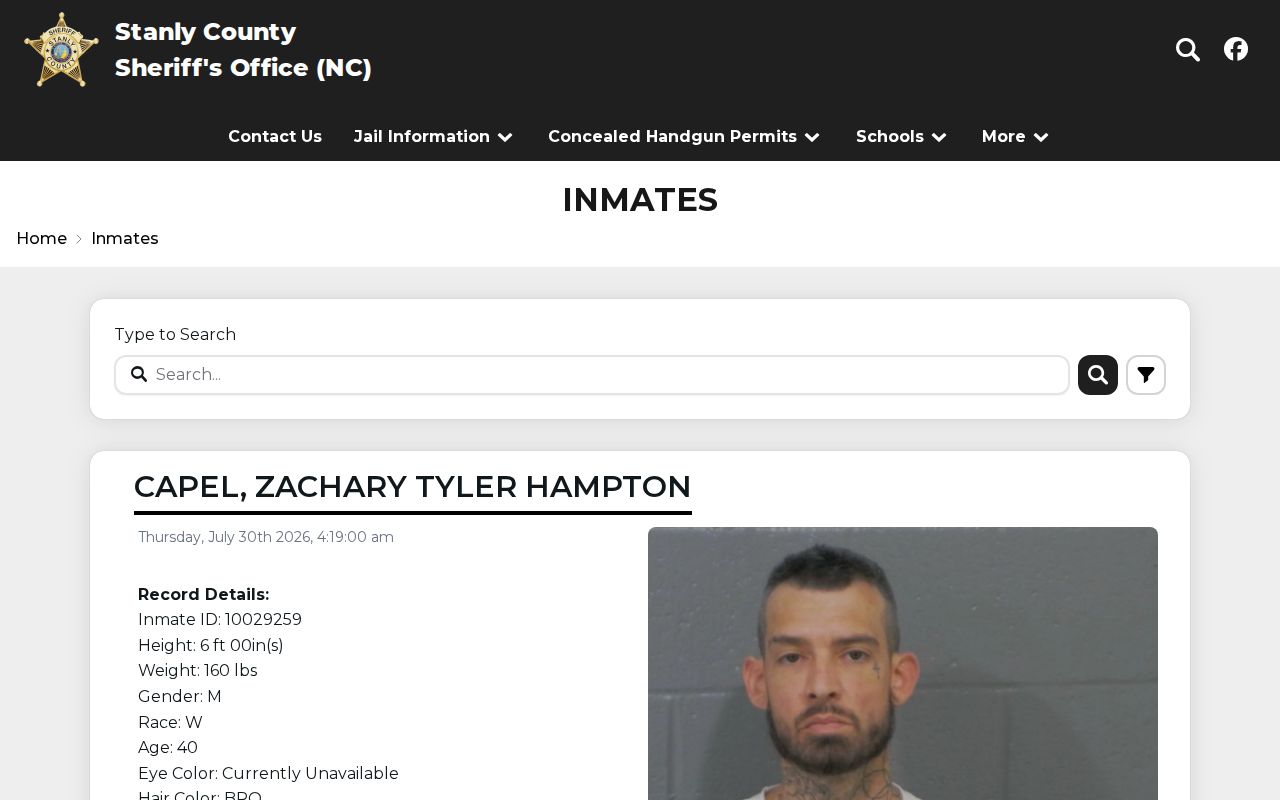
Its search and booking details can begin identity matching, but the screen is not a Stanly County release list and has no three-day archive.
Note: A booking photograph is an identity aid, not proof of conviction, current custody, or release during the selected period.
Stanly County Weekend Releases
A 72-hour range often spans days when court entries, jail processing, and public displays do not line up neatly. The Sheriff does not publish a weekend release schedule, holiday procedure, guaranteed web refresh time, or released-record retention window. That means a Friday order and a Monday roster change must be tied back to the physical release event. The order can explain authority but may not show when jail processing ended.
Use calendar dates and local times in every inquiry. Ask whether the actual exit fell inside the period, then ask whether it was release into the community or handoff to another agency. If the event crossed midnight, an exact timestamp matters. If staff cannot provide details by phone, seek the existing record rather than asking for a new narrative.
Holiday lag must not be assumed either. The research found no local promise about delay, so describe only the gap between sources and resolve it with the responsible office.
Stanly Court Events Across 72 Hours
The North Carolina Judicial Branch keeps the legal case path separate from the jail event. A court file may show a bond order, dismissal, acquittal, judgment, time-served sentence, probation order, or commitment to DAC. These entries can explain why custody changed. They generally do not establish the exact minute Ralph McSwain staff completed the physical exit.
Start with the Stanly County court page or eCourts case portal. Search by case number when known and match names with care. Read entries in time order, because a later order can change an earlier one. Use the separate North Carolina court-date search to identify a scheduled appearance that may have affected the selected period.
The North Carolina court-date interface is a useful timeline aid for a Stanly County three-day inquiry.
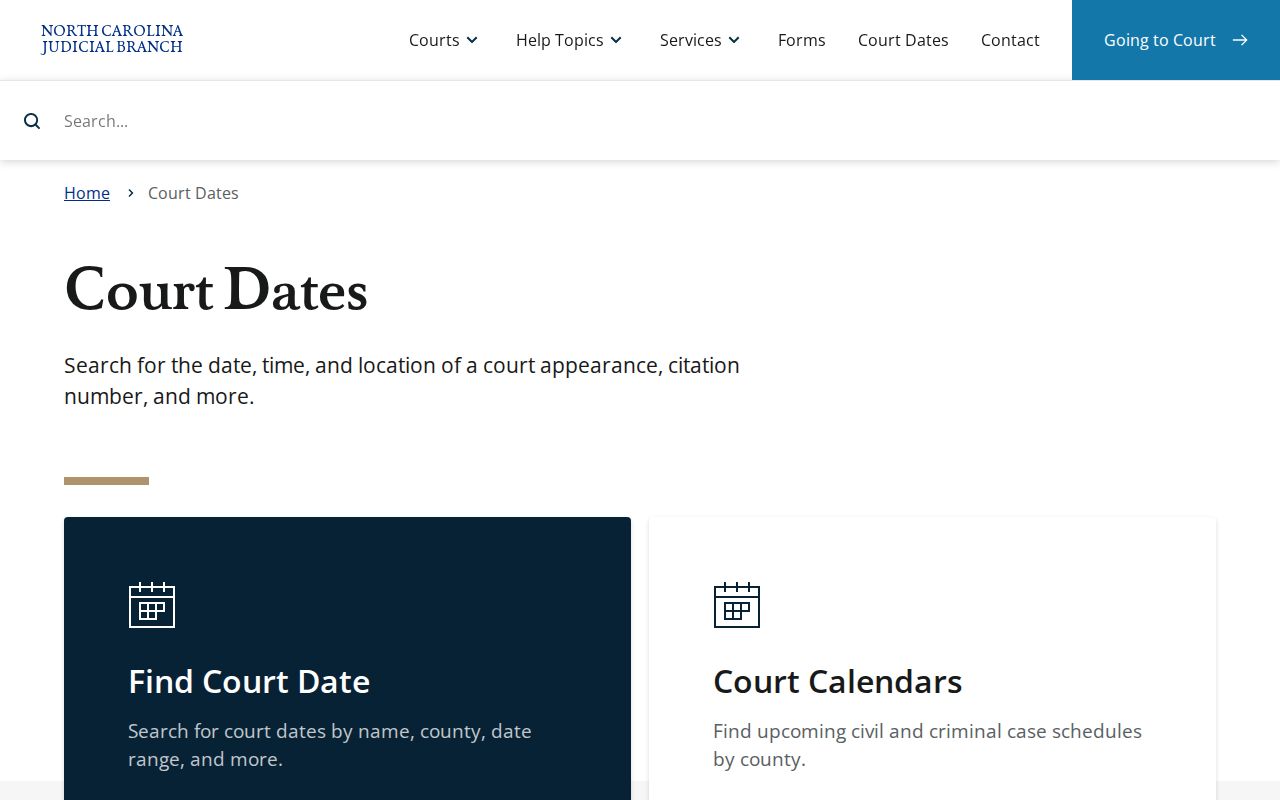
A listed hearing date is context only. Pair it with the court entry and Sheriff release event before stating that a release occurred.
Stanly 72-Hour Roster Data Quirks
The OCV/NCSWVINE feed gives a strong local warning against list subtraction. On the research date, all 142 inspected records carried the custody code IN. No record exposed release time, release reason, receiving agency, or a three-day flag. The schema included identity, physical descriptors, booked date, image data, agency identifiers, and a current status code.
Comparing a saved Friday roster with a Monday roster may reveal names that disappeared. It still cannot reveal why. One person could have bonded out, another could have completed a sentence, and another could have entered DAC custody. Corrections and reporting lag add more possibilities. Because the Sheriff publishes no refresh cadence or former-record retention rule, such a comparison cannot be labeled an official Stanly County 72-hour release list.
The correct follow-through is Booking for timely status, the county form for the event record, NC SAVAN for agency-reported status, the court for legal authority, and the receiving custodian for continued custody. Each source answers a different part of the timeline.
Request Stanly Three-Day Records
The county request form collects requester name, phone, email, requested or needed dates, information category and description, and incident identifiers. It offers routing to a Public Safety Agency. No jail-record price list, promised response time, detention-record email, or dedicated records-unit hours were published in the researched sources.
A narrow request can identify the exact start and end of the 72-hour period and ask for an existing release-event extract, if maintained. For one person, include full name and aliases, date of birth when needed to distinguish records, inmate or booking number, and approximate booking dates. Ask for the actual release date and time, authority or type, and receiving agency or destination if recorded and public. The agency applies any legal restrictions and need not create a new report.
The official county request page provides the correct formal channel.
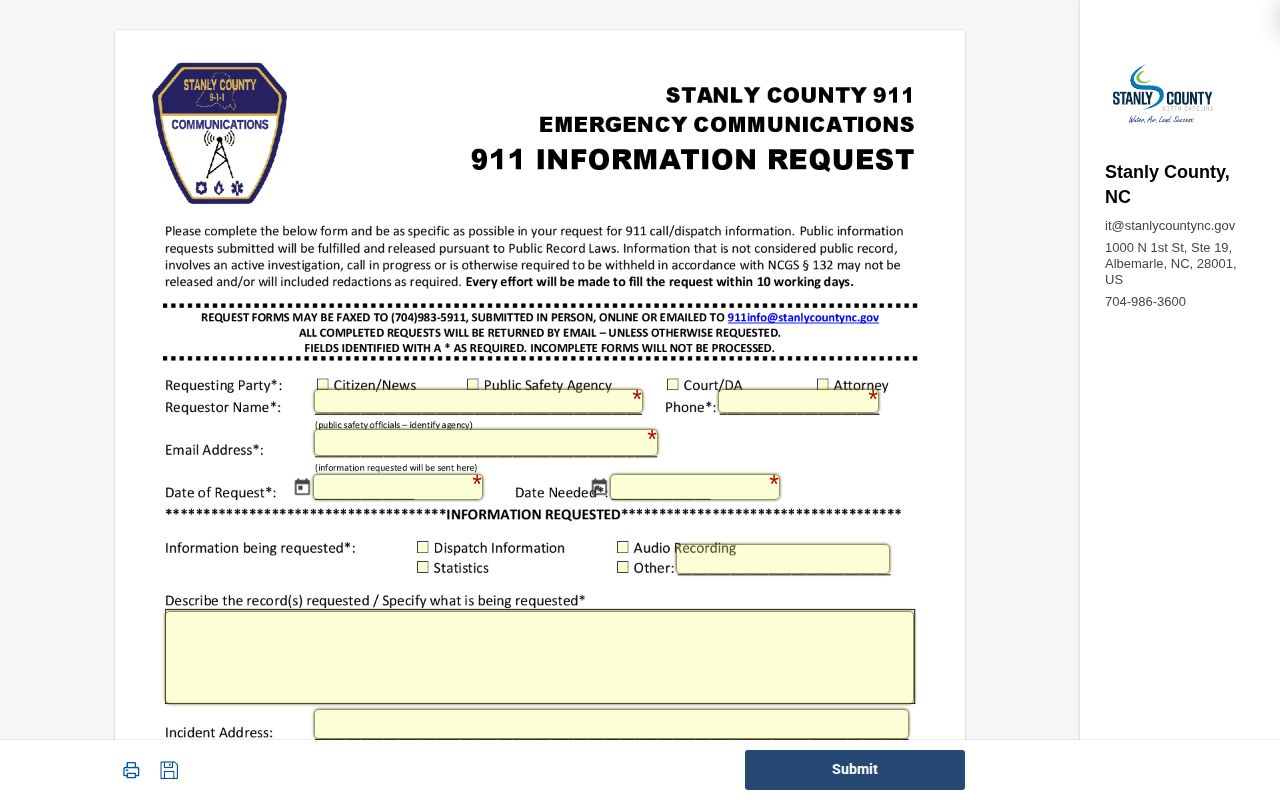
Defining the period and fields helps staff locate an existing record without asking them to infer the intended event.
Note: Ask for an existing record or extract; North Carolina access law does not require an agency to create a custom release list.
Stanly Release Paths After Three Days
Ralph McSwain Detention Center and Albemarle Correctional Institution use different record systems. A local jail release is confirmed through the Sheriff event, with NC SAVAN and the court as corroboration. A move from the jail to Albemarle or another state prison is continued incarceration, not a community release. The North Carolina DAC offender search is the right place to follow that transfer.
For a state-prison release, read the most recent incarceration period’s Actual Release Date with present inmate and supervision status. DAC also offers a monthly Inmate Release Search with STANLY as a release-county option. That statewide tool is not the Sheriff’s 72-hour feed and should never be presented as one. A county bond-out may never appear in DAC.
Federal and immigration cases require their own custodians. A federal pretrial transfer may involve USMS, while sentenced federal custody belongs in BOP records. An ICE handoff is a transfer into immigration custody. When the custodian changes, continue the three-day timeline in that agency’s system rather than calling the county disappearance a discharge.
Confirm Stanly County Release Status
Three terms keep the final result accurate. “Community release” means physical jail or prison custody ended, though bond conditions or supervision may remain. “Transfer” means custody continued under another agency. “Discharge” means the relevant term or supervision ended, which is broader than simply walking out of a facility.
Use the event date, movement type, and receiving agency together. An NC SAVAN release notice may corroborate a change but can lag and is not a certified historical ledger. A court order explains legal authority but not always the door time. The originating custodian’s event remains the strongest answer to who was released from that facility during the selected 72 hours.
A search for one specific person across older or uncertain custody systems belongs in the Stanly County released-inmate lookup, where state, federal, court, and notification paths can be matched to the case.